



Every tuition centre owner knows the maths: keeping an existing student costs far less than recruiting a new one, yet most retention effort amounts to hoping parents re-enrol next term. Meanwhile the same familiar problems recur — late payments, drifting attendance, and families who quietly leave because nothing tied them to your centre beyond this term's classes.
A student loyalty program tackles all three at once. By rewarding the behaviours you want — continued enrolment, timely payment, punctual attendance, effort in class — with points that convert into tangible gifts, you give families a concrete, ongoing reason to stay engaged. It's also one of the more visibly successful modules in SchoolTracs, and on the student side, checking a points balance in the Student App becomes a routine habit. This guide covers how to design the program using the SchoolTracs Reward Points Program: setting earning rules, choosing rewards, automating points, and making redemption visible enough to motivate.
How should families earn points?
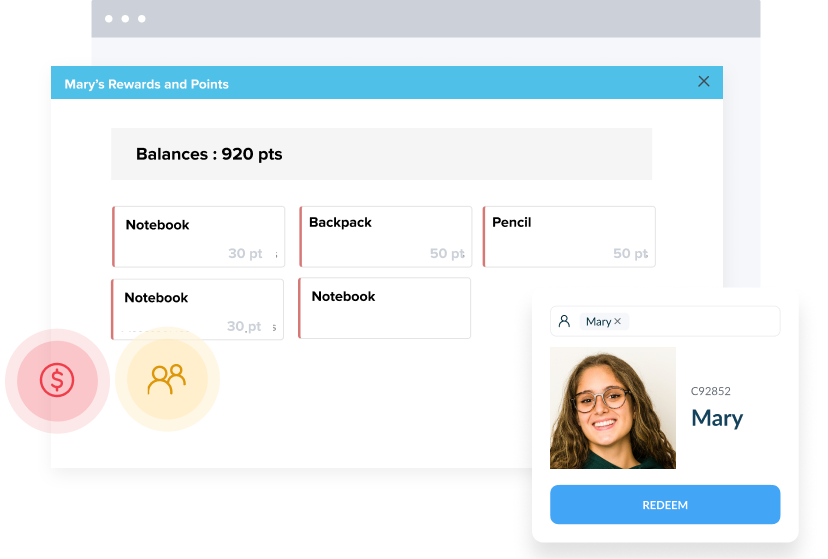
Start with spending. The core of the program is a customisable redemption rate: you set your own earning rules — for example, every $100 spent equals 10 points — and you decide what works best for your centre. Because points accrue with every payment, parents are rewarded for exactly the behaviours that keep your centre healthy: ongoing enrolment and paying on time. Every invoice settled becomes progress toward a reward rather than just a bill.
Two design levers make the earning side stronger:
- Points expiry: set a validity period for points to encourage earlier use and more frequent engagement — balances that never expire stop motivating anyone.
- Manual awards: teachers can grant extra points to students as a reward for outstanding performance, so points recognise learning as well as spending.
Can points reward attendance automatically?
Yes — and this is where the program starts shaping day-to-day behaviour, not just billing. With attendance-based points, SchoolTracs automatically awards points when students attend classes on time. Punctuality and consistent attendance get reinforced every single lesson with minimal setup, because the points flow from the attendance records you already take.
- Points are awarded automatically on punctual attendance — no admin work per lesson.
- You can set different rules for each course or student group for greater flexibility, for example weighting a course where attendance has been slipping.
Attendance is one of the earliest warning signs of churn; rewarding it directly is one of the cheapest retention levers available.

How do teachers recognise effort with points?
Retention isn't only a parent decision — students who feel recognised want to come back. Through the Teacher App, teachers can add points instantly during or after lessons to reward good behaviour, effort or participation.
- Points are granted in the moment, when recognition means the most.
- Teachers can attach short remarks as "recognition notes", so each reward carries a reason the student and parent can read.
- Recognition becomes part of the lesson routine rather than an occasional gesture.
What should points be redeemable for — and how do students redeem?
Rewards don't need to be expensive; they need to be visible and attainable. Parents and students can use points to claim items like tote bags, exercise books, or any products you specify — small, branded gifts work well because younger students genuinely want them and they keep your centre's name in the home.
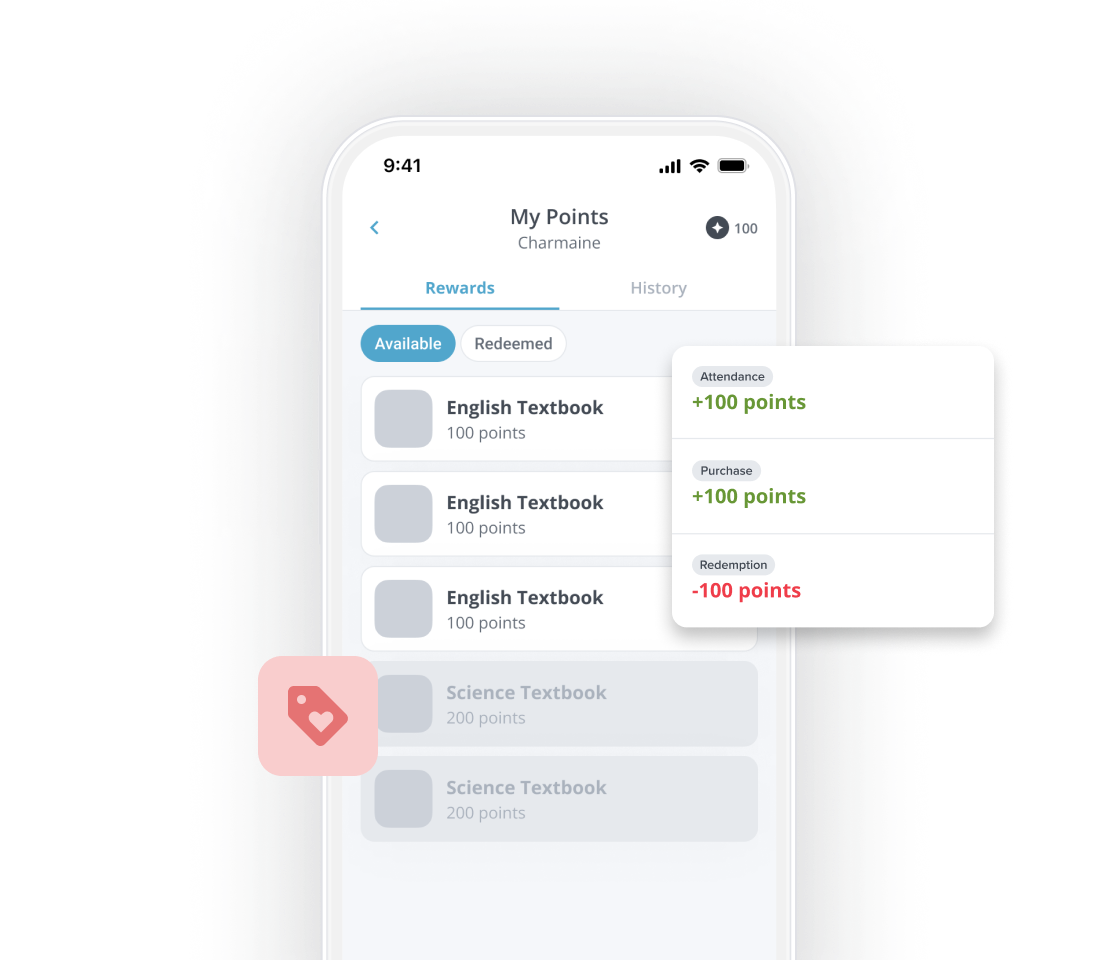
Visibility is what sustains motivation. In the Student App, students can track their total points and see the available rewards directly, so they know exactly how close they are to their next redemption goal. When they're ready, they redeem directly in the app — the same screen students already return to regularly to check their balance — and collect the reward at the centre — easy, engaging, and a nice moment at the front desk.
What mistakes make loyalty programs fail?
Most failed points programs die from the same few design errors, all avoidable:
- Rewards set too far away. If a family's realistic first redemption is a year out, the program never feels real. Make sure an average student can reach the entry-level gift within one term.
- Points nobody can see. A balance that lives only in the admin system motivates no one — visibility in the Student App is what turns points into a goal students actually chase.
- Rewarding only spending. If points track invoices alone, students have no personal stake. Attendance and teacher-recognition points give the child a reason to care, and the child's enthusiasm is what parents respond to at re-enrolment time.
- Launching silently. A program parents don't know about is a cost, not a retention tool. Announce it, mention it on invoices and at the front desk, and let teachers reference it in class.
Get these four right and the mechanics above — earning rate, expiry, automation, in-app redemption — largely run themselves.
Why does a loyalty program boost retention?
Pulling the pieces together, a well-designed points program works on retention from several directions at once:
- It encourages ongoing enrolment and timely payments from parents, because every payment earns visible progress.
- It creates a vibrant and engaging learning community — students compare points, chase redemption goals, and get recognised for effort.
- It reinforces punctual, consistent attendance automatically, lesson after lesson.
- It builds long-term loyalty: the accumulated balance itself is a reason to stay rather than switch centres.
A practical launch sequence: set your earning rate and expiry, stock three or four redeemable gifts at different point levels, enable attendance-based points on your core courses, and brief teachers on awarding recognition points. Announce it to parents alongside the re-enrolment cycle — the timing does the selling. Loyalty points also pair naturally with your broader parent communication; see how to keep parents informed for the messaging side of retention.
With SchoolTracs, rewarding ongoing participation is easy and automatic — points accrue from payments and attendance you already record, teachers add recognition in seconds, and students watch their progress in the app. SchoolTracs states that it has 450 subscribers across centre types including tutorial centres, preschools, music schools and dance studios. Apply for a free trial to activate the Reward Points Program and make every class count.
Frequently asked questions
How do students and parents earn points in a loyalty program?
You set your own earning rules — for example, every $100 spent equals 10 points. Points can also be awarded automatically when students attend class on time, with different rules per course or student group, and teachers can grant extra points manually for outstanding performance or effort.
What can loyalty points be redeemed for?
Parents and students can redeem points for special gifts you specify, such as tote bags, exercise books or other products. Students track their points and available rewards in the Student App, redeem directly in the app, and collect the reward at the centre.
Should loyalty points expire?
Setting a validity period is recommended. Expiry encourages families to use points earlier, which drives more frequent engagement and keeps the program active rather than letting balances sit unused.
Does a loyalty program actually improve retention?
A points program gives families an ongoing reason to re-enrol and pay on time, creates a more engaging learning community, and rewards the behaviours — punctual attendance, effort, continued enrolment — that correlate with students staying long term.